
Smartphones have become a necessity for modern life. From social entertainment, mobile payments, work communication, to navigation and transportation, smartphones cover nearly every aspect of daily activities. As smartphone functions become more powerful and usage frequency continues to rise, “battery anxiety” has become a widespread global problem. Mobile phone charging stations provide users with instant and on-the-go charging solutions, while creating promising business opportunities for investors.
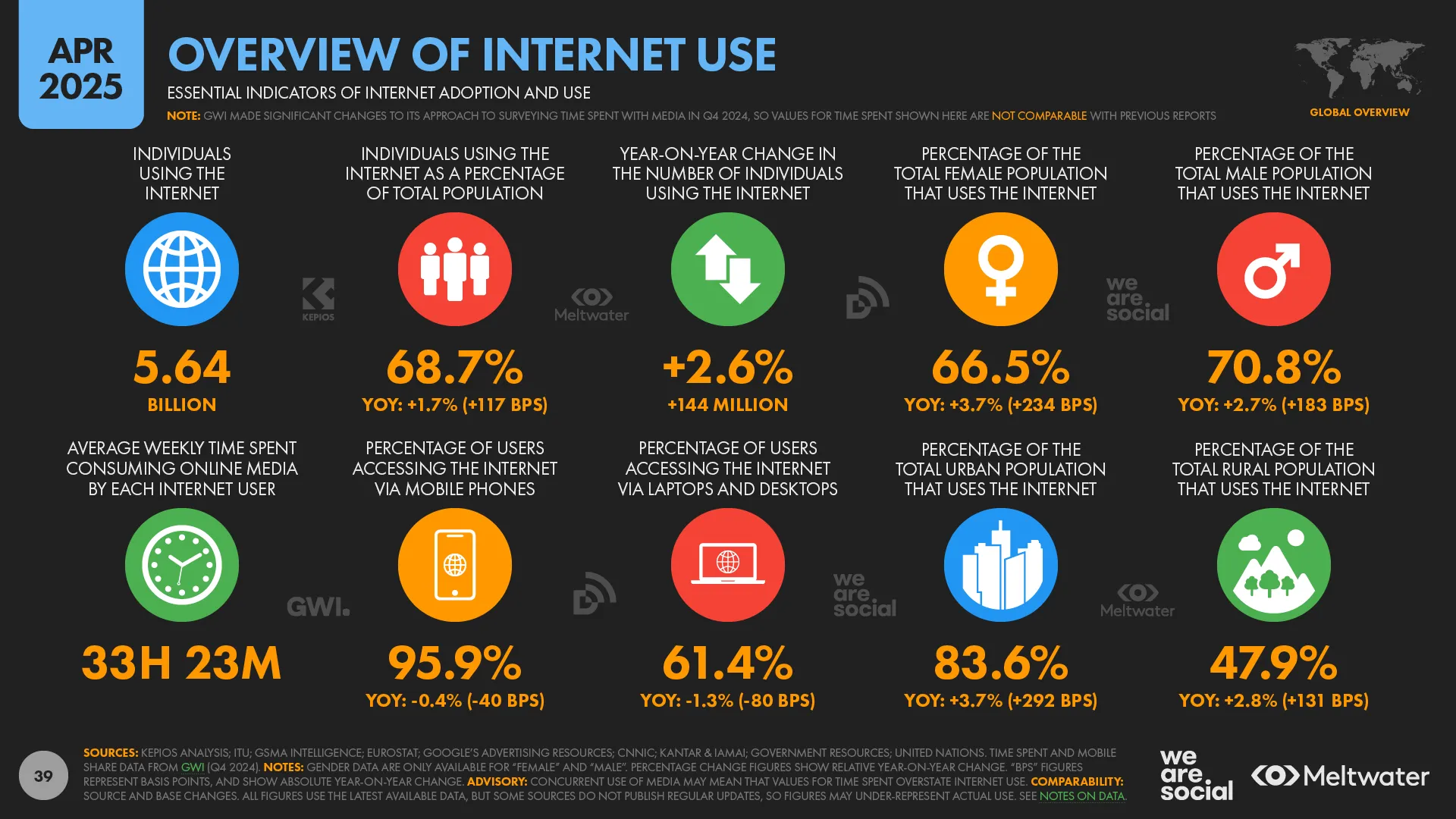
According to the latest data from Meltwater, the global internet population reached 5.64 billion in 2025. Each internet user spends an average of 33 hours and 23 minutes per week using online media, and 95.9% of users access the internet via mobile devices. People now rely on smartphones for work, entertainment, communications, and daily life. With limited battery endurance, power anxiety has become a common phenomenon. The global shared power bank market has rapidly expanded as dependence on mobile devices increases.
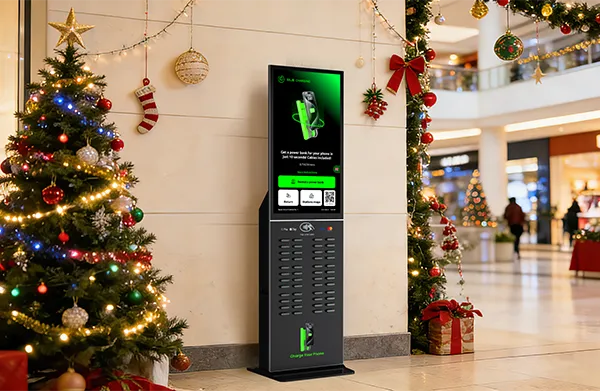
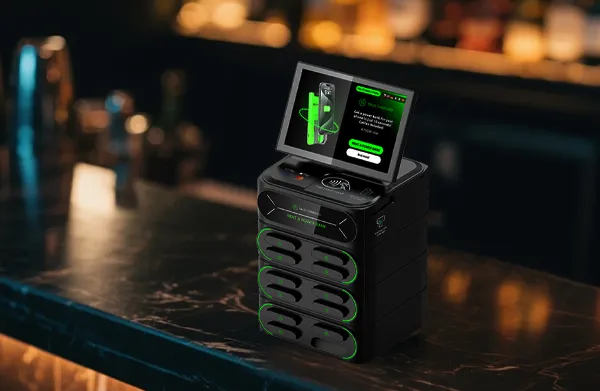
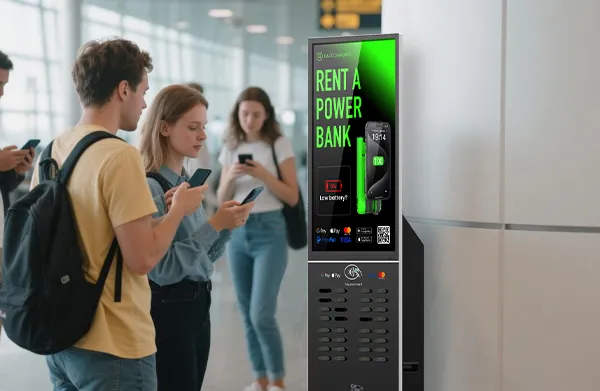
Power bank vending machines are widely deployed in shopping malls, airports, and other public venues, offering convenient instant charging services. Phone charging stations generate diversified revenues through rental fees, advertising, value-added services, data services, and product sales. As a proven business model worldwide, cell phone charging stations attract global investors with advantages such as scale effects, fast payback, and strong commercial viability.
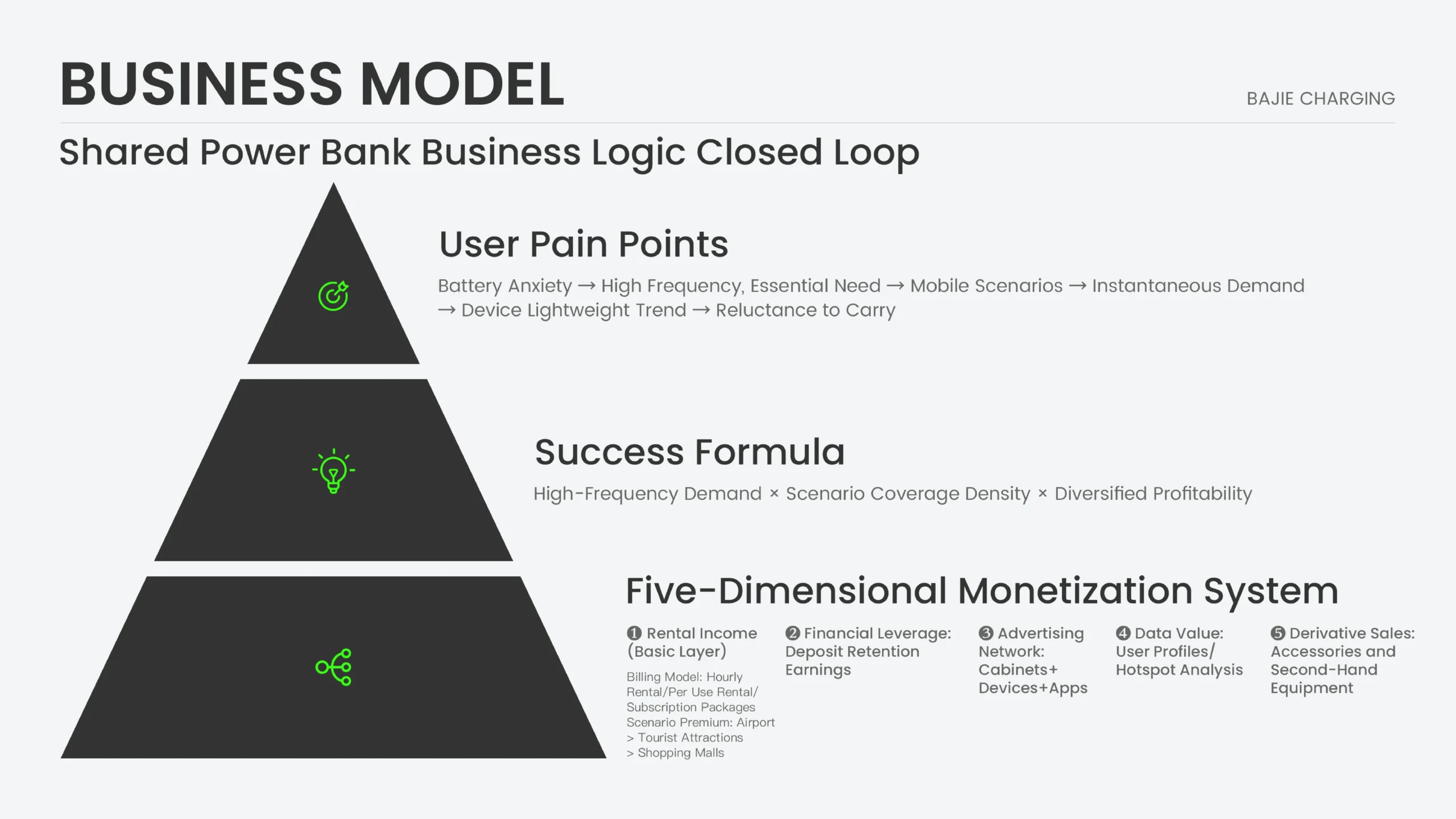
1. How do multiple revenue streams make phone charging stations a more secure investment?
The primary revenue source for shared power bank rental stations comes from rental fees paid by users. While each individual rental is inexpensive, mobile phone power banks are deployed across high-traffic venues, and frequent rentals generate significant cumulative revenue.
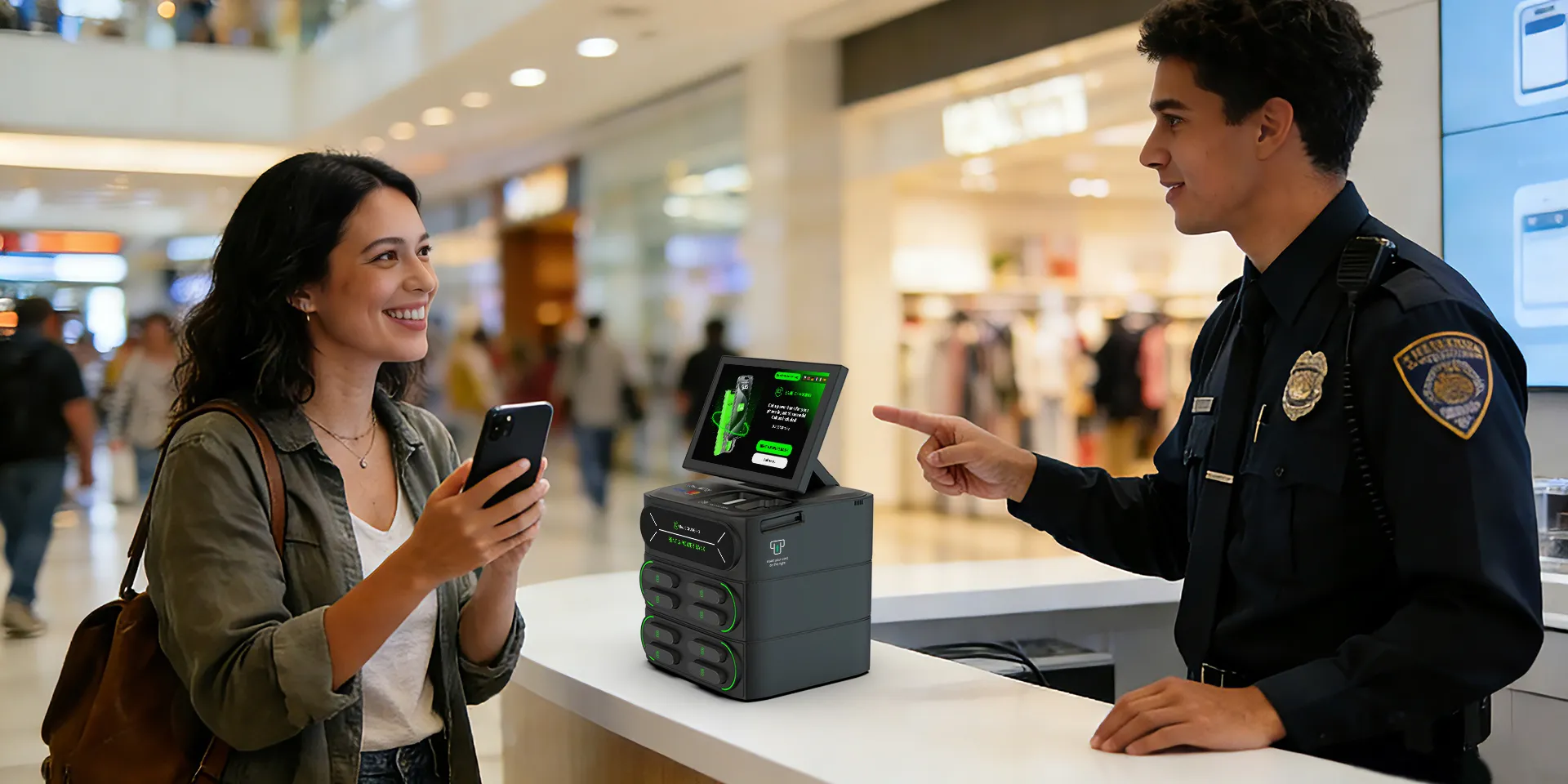
Rental pricing can be based on duration, usage frequency, or packages. Time-based pricing typically charges per hour or per half hour. Different locations (restaurants, shopping malls, transportation hubs, etc.) may use differentiated pricing strategies. During peak demand periods (weekends, holidays, and special events), dynamic pricing can further boost revenue.
Screen displays or apps on shared charging stations enable brand advertising, creating advertising revenue for investors. By leveraging data such as rental frequency, usage scenarios, and dwell time, the phone charging station platform can offer brands more accurate advertising placements, improving conversion and returns.
Security deposits generate temporary capital float, allowing investors to gain short-term investment or operating benefits during the rental period. The industry is shifting toward deposit-free models using credit evaluation, which increases user conversion and reduces entry barriers. For overseas deployments involving multiple currencies, pre-authorization payment has become the mainstream settlement method.
Value-added service revenue is commonly generated through app features and brand collaborations—such as coupons, memberships, and local lifestyle information—enhancing user stickiness and activity while creating additional earnings. Partnerships with dining, transportation, and local service providers further diversify revenue channels.
Intelligent vending machine power banks convert user behavior data into commercial insights. By providing foot traffic analysis, user profiles, and customized data services, operators can generate additional service-based income for partners and brands.
Accessory sales, device refurbishment, and secondary sales create a “sell-recycle-resell” closed-loop business model, achieving diversified revenue and sustainable resource utilization.
By integrating rental fees, advertising, deposits, value-added services, and product sales, shared power bank stations reduce reliance on a single revenue stream and enhance business resilience, giving investors stronger income protection.
2. Why do investors choose to enter the cell phone charging locker business?
Power bank rental stations directly address an essential daily need—mobile power supply. By deploying equipment across restaurants, entertainment venues, and transportation hubs, they enable instant charging services in core consumption scenarios. The commercial model is straightforward: broad deployment creates scale effects and recurring cash flow from rental, advertising, and other income streams. Shared power bank businesses have a relatively short payback cycle, low marginal costs after scale, and strong profit growth potential.
- Fast Payback
Through diversified income channels, many well-positioned shared power bank deployments can recover initial investment within 3–6 months, achieving short payback cycles and high capital turnover efficiency.
- Proven Model
The model has been validated globally. Bajie Charging has over 500 successful deployment cases, demonstrating the universality and sustainability of the power bank station business model.
- Scalable Operations
With standardized hardware and operational workflows, phone charging locker businesses can be rapidly replicated and scaled. Investors can start with pilot deployments and then expand across new regions or venues for exponential growth.
- Stable Cash Flow
Continuous charging demand generates passive recurring income. With efficient operations, phone charging vending machine projects can achieve returns exceeding 300% annually, delivering strong wealth growth for investors.
Conclusion
Shared power bank rental stations generate revenue through time-based rental fees, advertising, deposits, value-added services, and product sales. Rental fees cover operating costs and enable rapid profitability. Partnerships with high-traffic venues enable brand advertising, increasing advertising income.
Membership services and local lifestyle integrations further boost value-added revenue. Deposits generate temporary capital float, creating short-term financial gains. Accessory sales expand revenue diversity.
Alongside high usage frequency, large-scale deployments, and data-driven operations, charging station networks unlock scale advantages that maximize economic returns. The larger the deployment and the higher the usage rate, the lower the unit cost.
With diversified revenue streams, phone charging stations help investors achieve fast payback on premium locations. Standardized operational models enable rapid copying and expansion, while sustained market demand delivers passive income and high long-term returns.