
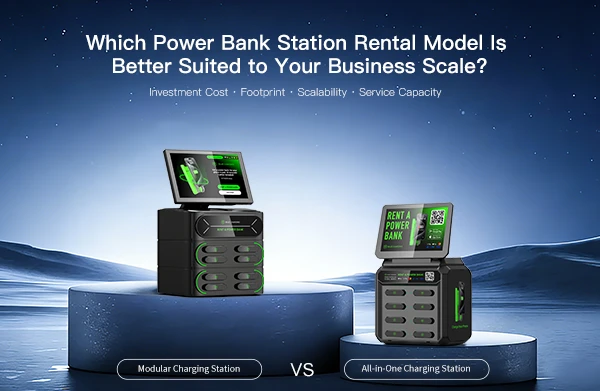
By addressing battery anxiety caused by the widespread use of mobile devices, portable power chargers have become a global, on-demand solution for convenient charging. As operators expand their power bank rental business, a key question arises: should you deploy modular charging stations or integrated (all-in-one) charging stations? Which solution offers greater advantages? And how should you plan your deployment strategy at different stages of business growth? This article analyzes the strengths of different portable charger and power bank solutions in terms of investment cost, space requirements, scalability, and service capacity—helping operators choose the right strategy.
1. What Are the Features of Modular Charging Stations?
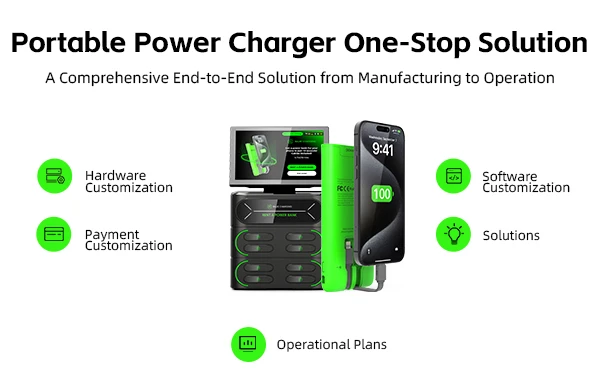
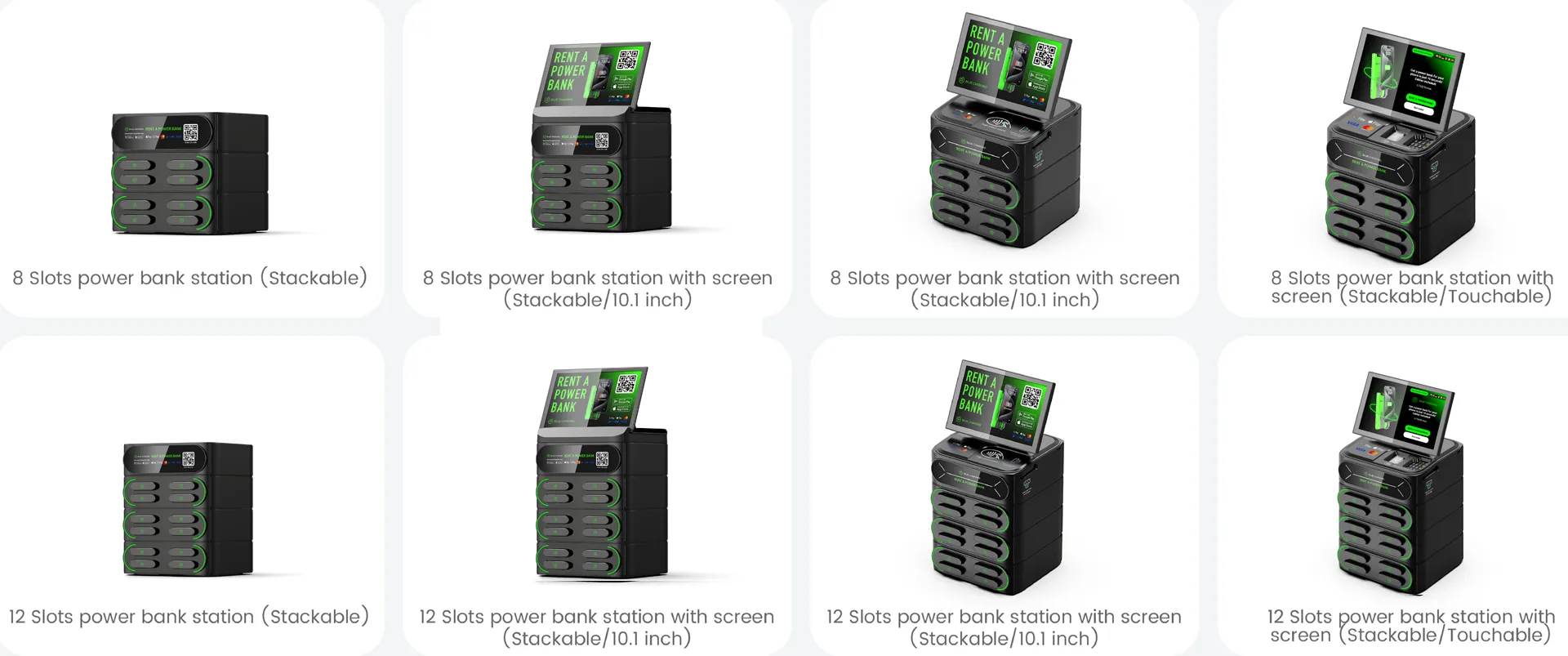
Modular charging stations adopt a flexible design that supports configurations of 4 / 8 / 12 / 16 / 20 / 24 slots. Operators can freely add or remove modules based on actual demand. If a module fails, it can be replaced individually without repairing the entire unit, making maintenance fast and efficient.
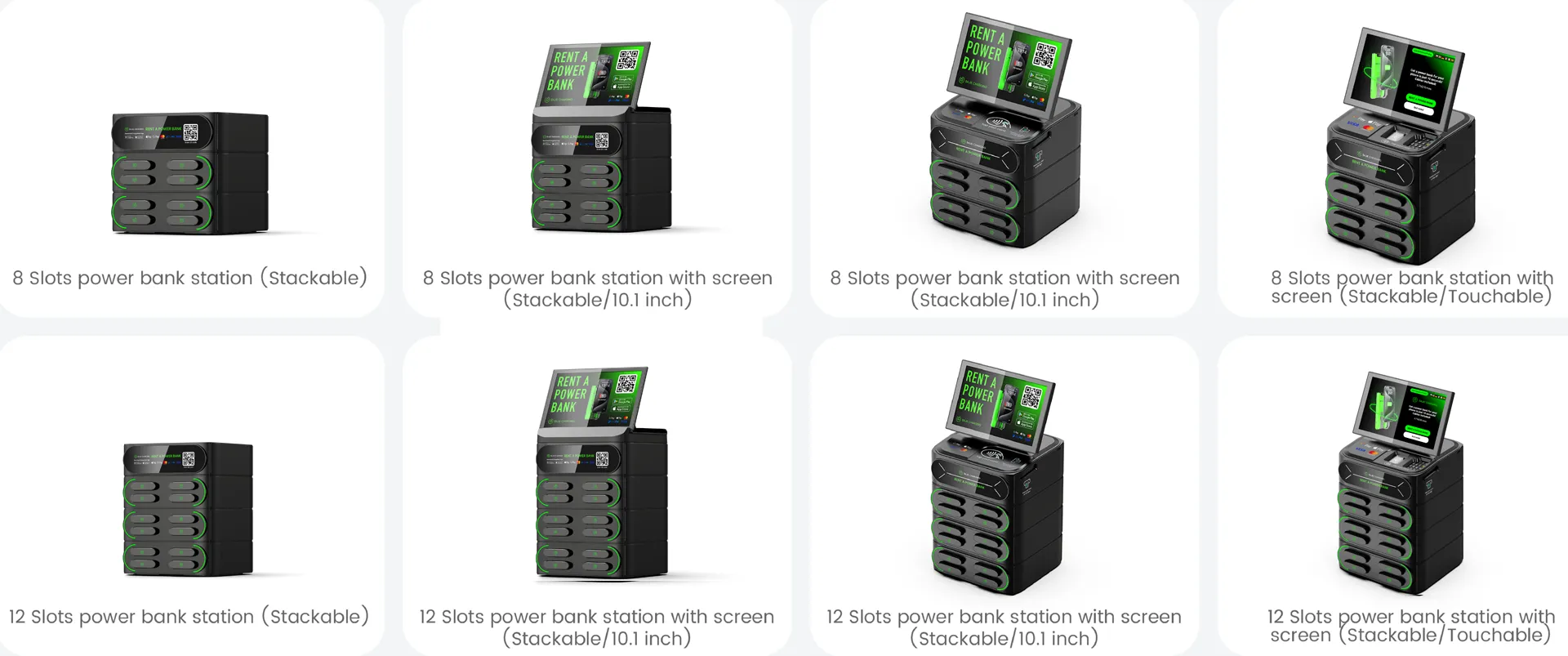
- Flexible Configuration, Cost-Effective Deployment
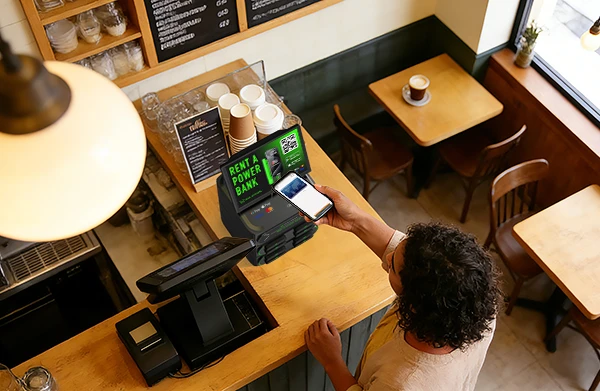
Modular stations can be customized according to venue demand and usage frequency. Operators can scale gradually, reducing upfront investment pressure while optimizing ROI.Compared to traditional desktop or floor-standing stations that occupy space, modular units can be installed using vertical stands or wall-mounted displays. This allows deployment in small venues without taking up valuable business space, while also enabling flexible repositioning.
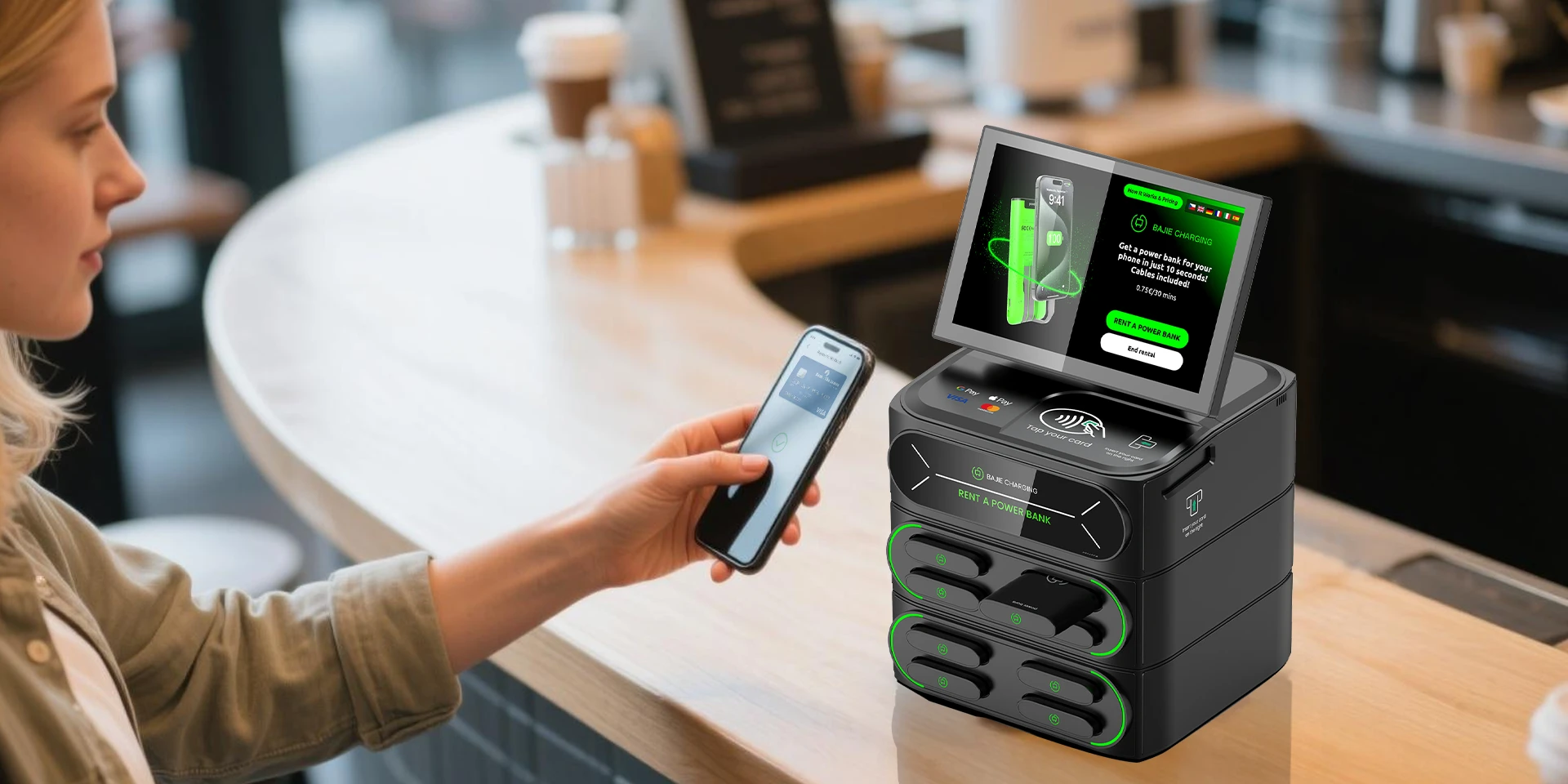
- Easy Maintenance, Lower Costs
When a fault occurs, only the affected module needs to be replaced or repaired—without interrupting overall operation. This modular structure reduces maintenance complexity and cost. In contrast, traditional integrated stations often require more complex repairs and skilled technicians.
2. What Are the Features of Integrated (All-in-One) Charging Stations?
Integrated charging stations have a fixed structure and cannot be expanded or reduced. They come in two main types: desktop and floor-standing.
- Desktop Integrated Stations
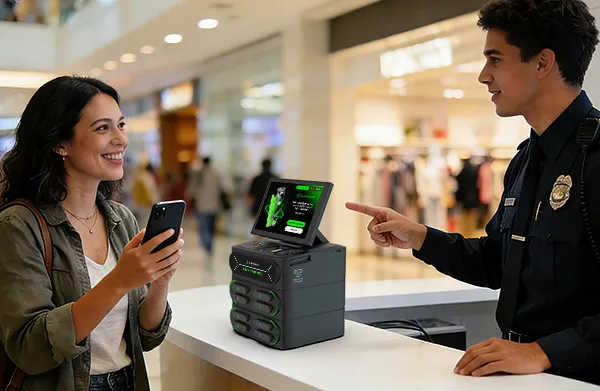
Available in 5 / 6 / 8 / 12-slot configurations, these compact units require no complex installation—just plug and play. They are ideal for restaurants, cafés, and convenience stores.By matching deployment with actual foot traffic, operators can avoid low utilization rates and improve profitability.
- Floor-Standing Integrated Stations
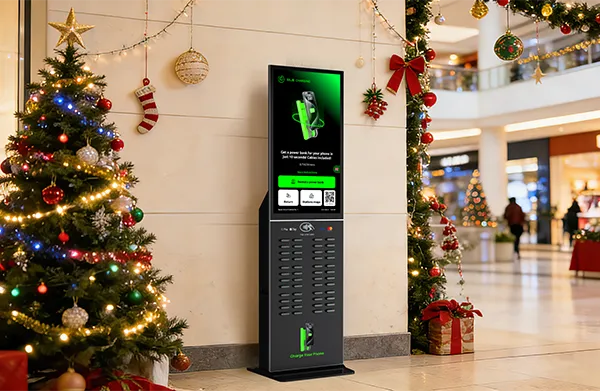
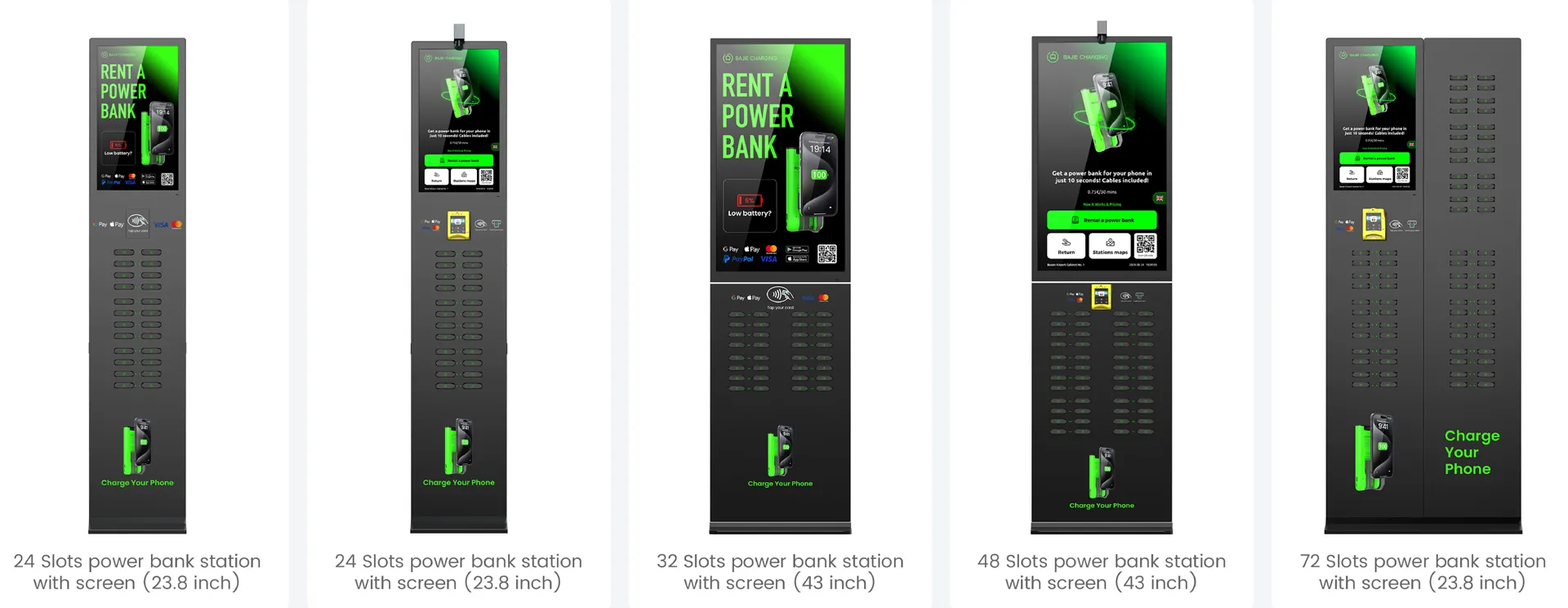
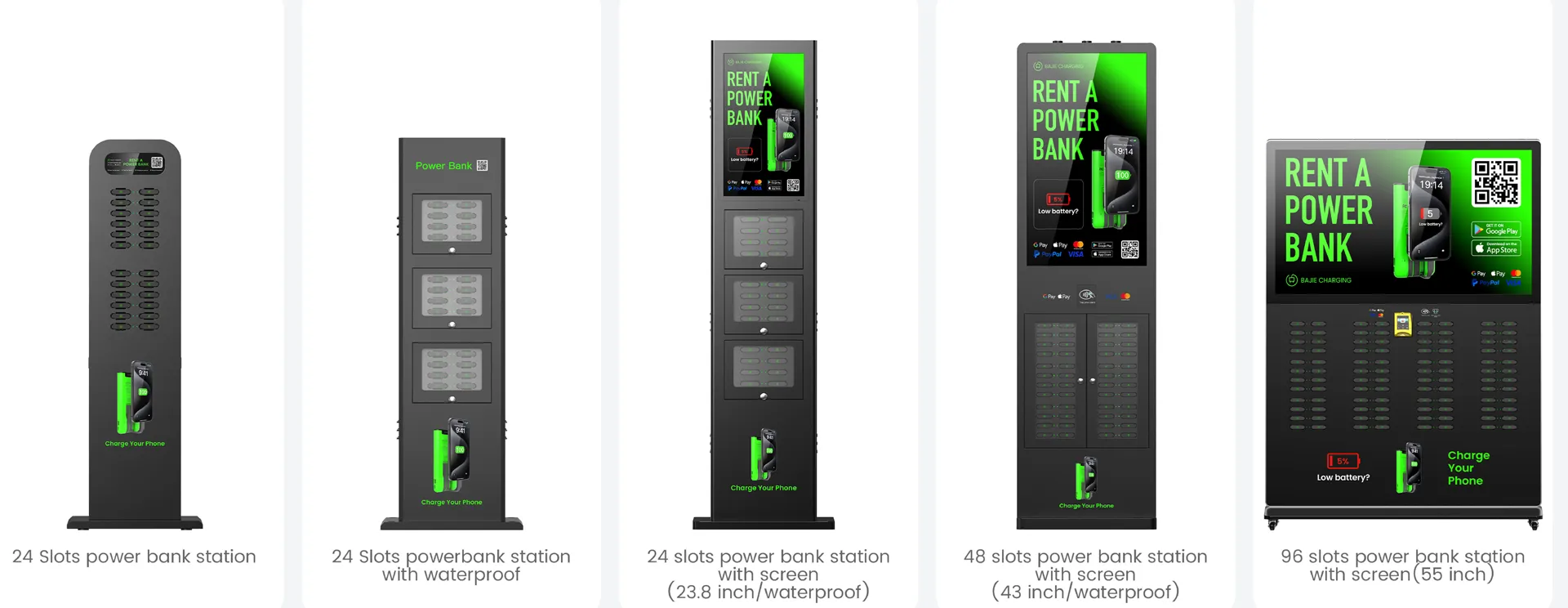
These units offer higher capacity, with configurations such as 24 / 32 / 48 / 72 / 96 / 120 / 168 / 216 slots. They are suitable for high-traffic locations like shopping malls, transportation hubs, and airports.They can handle high-frequency usage and peak demand without running out of available power banks—ensuring no loss of potential users. Customers can rent via QR code, card, or other methods, and return the device at any station within the same network.
- Advertising Revenue Potential
Floor-standing units support multiple screen sizes (e.g., 23.8”, 43”, 55”). Large-screen cabinets—especially 96-slot units with 55-inch displays—are highly effective in high-traffic environments like airports, attracting brand advertisers and generating additional revenue streams.
- Flexible Combination (Main + Sub Cabinets)
Although integrated, these systems can scale via cabinet combinations. For example: 72-slot = 24-slot main cabinet + 48-slot sub cabinet. Configurations can expand to 120 / 168 / 216 slots. This allows flexible adaptation to different traffic levels.
3. How Should Operators Plan Deployment at Different Growth Stages?
- Startup Stage: Rapid Expansion with Low Risk
At the early stage, operators should prioritize fast deployment and cost control. Modular charging stations are the ideal choice due to their low upfront cost and flexible configuration.Start with small-to-medium venues such as restaurants and bars to build network coverage and collect operational data. Modular systems also offer quick maintenance, minimizing downtime.
- Growth Stage: Optimize Network and Increase Revenue per Location
As the business grows, focus shifts to improving the profitability of each location. Deploy floor-standing integrated stations (48+ slots) in high-traffic areas such as malls and transportation hubs to maximize revenue. Upgrade modular stations in medium-traffic venues (e.g., from 8 to 12 slots). Use compact modular units in cafés and tea shops where space is limited.A hybrid deployment strategy (modular + integrated) ensures optimal resource allocation.
- Maturity Stage: Data-Driven Optimization and Scale Effects
At the mature stage, operators should focus on refined operations and maximizing network efficiency. Using backend data (rental frequency, revenue per location, dwell time), operators can dynamically adjust:Equipment type, Slot capacity ,Location distribution. Modular stations can be relocated from underperforming locations to high-growth areas, improving utilization.Large integrated stations should be deployed in core locations (airports, transport hubs) to enhance brand visibility and market influence.
Conclusion
Modular charging stations (4–24 slots): Flexible, easy to maintain, low initial investment—ideal for small and medium traffic locations.Integrated charging stations:Desktop (5–12 slots): Compact and easy to deploy in small venues,Floor-standing (24–216 slots): Designed for high-traffic environments
Recommended Strategy:Startup stage: Focus on modular stations for fast, low-cost expansion. Growth stage: Combine modular and integrated solutions for higher efficiency. Maturity stage: Use data-driven optimization to achieve scale and competitive advantage. By aligning deployment strategy with business growth stages, operators can maximize ROI, improve operational efficiency, and build a strong, scalable shared charging network.
March 21, 2026