

After launching a mobile phone charging station business, what else should operators do? Deploying portable power chargers across different locations is only the beginning. To succeed in this business, it’s not enough to rely on good locations alone—continuous optimization through data analysis is essential. Data analysis across site distribution, device turnover rates, and rental behavior can help operators improve the profitability of their shared power bank business.
1. How to Quickly Identify High-Revenue Mobile Charging Station Locations Through Data Analysis?
Cellphone charging stations need to be deployed in locations such as shopping malls and airports to match users’ emergency charging needs in different scenarios. However, without data analysis, operators cannot accurately evaluate the true value of each location.
This often leads to blind deployment in places like libraries—high foot traffic but low rental demand—resulting in low device turnover, longer ROI cycles, and increased investment pressure. In addition, relying only on device online status without deeper data insights can cause popular locations to run out of available power banks during peak hours, leading to user loss.
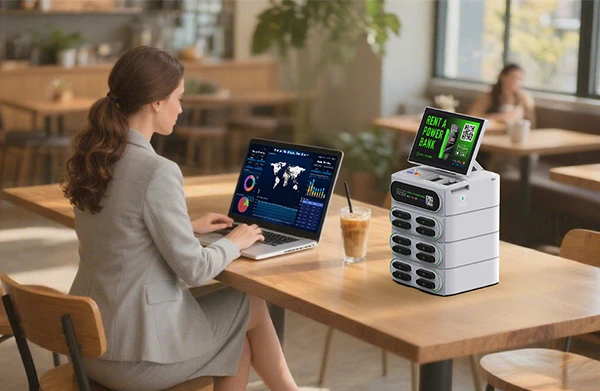
Through data analysis, operators can access real-time and historical data such as: Site distribution, Peak rental periods, Order volume and revenue. This enables precise identification of high-rental-rate locations and peak usage periods, helping operators decide whether to increase the number of power banks or cabinets, and optimize phone charging station operations.

2. How to Optimize Cell Phone Charging Station Operational Decisions Through Data Analysis?
- Smart Deployment and Site Optimization
The quality of a charging station for multiple devices depends largely on device utilization and profitability. Metrics such as daily average orders, device utilization rate, and turnover rate can directly indicate whether a location is active.
For example, if three devices are deployed at a single location and one has significantly lower usage, the issue may be poor visibility. Relocating the device to high-traffic areas such as entrances, cashier counters, or seating zones can improve usage rates.
- Improve Rental Convenience
By analyzing repeat rental frequency, operators can determine whether the rental process is convenient enough. Relying solely on QR-code-based charging stations is not sufficient.
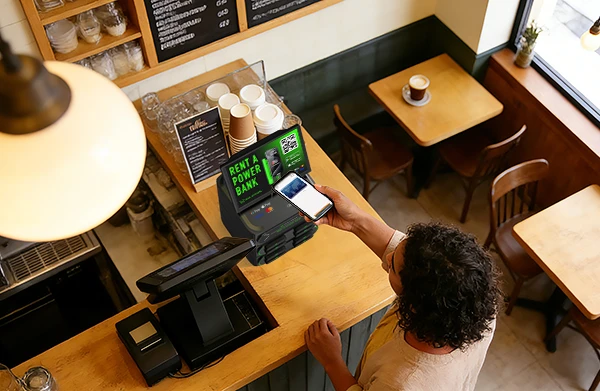
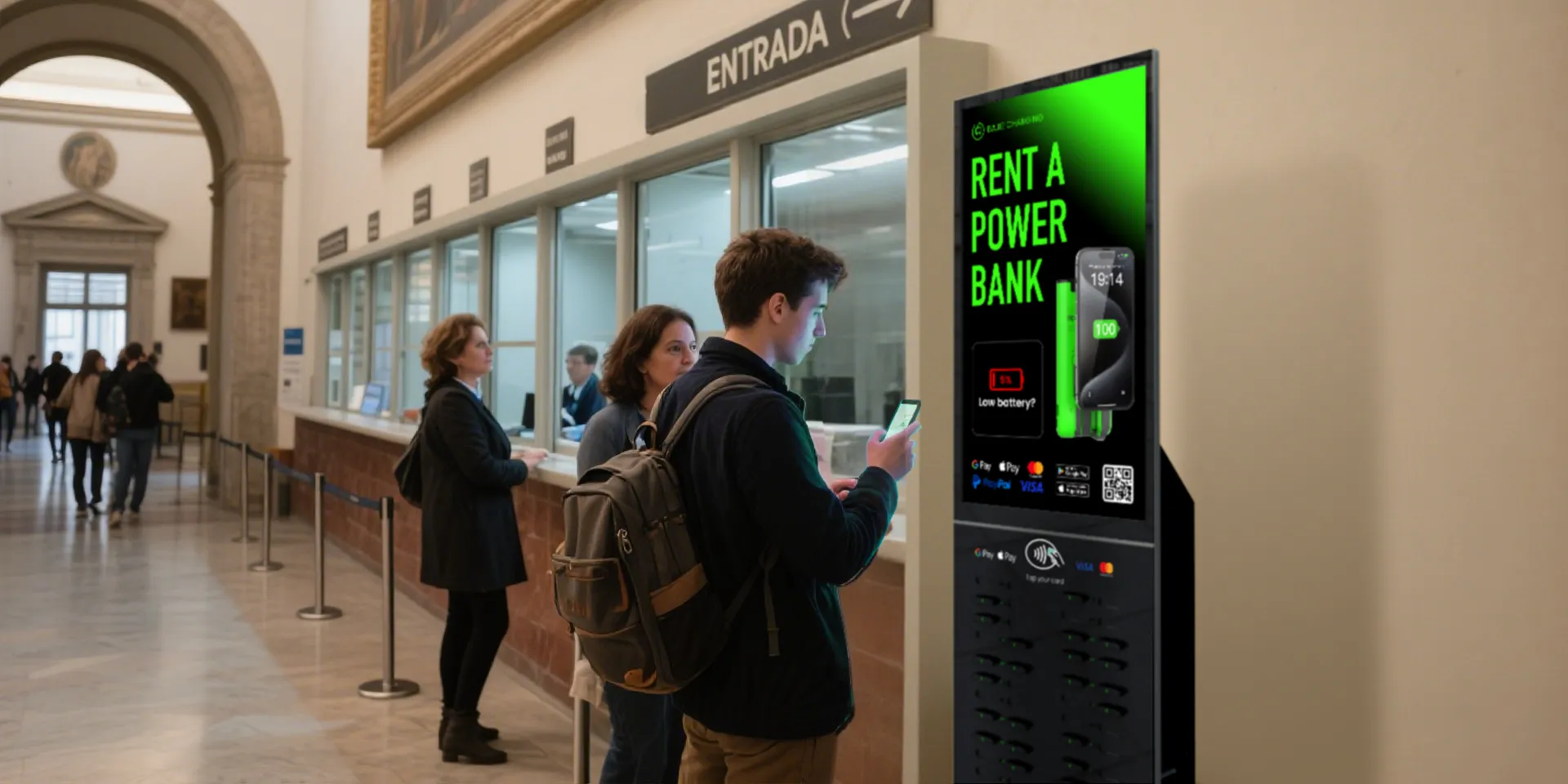
Operators should adapt to local payment habits and offer multiple rental methods, allowing users to rent easily via: Card payment, NFC (Apple Pay / Google Pay / Samsung Pay), Camera-based QR scanning, A smoother rental experience leads to higher user satisfaction and increased usage frequency.
-21.webp)
- Dynamic Resource Allocation
For high-order and high-turnover locations, operators can increase the number of phone charger with stand units based on demand.If a location frequently runs out of available power banks, more charging stations must be added to meet growing user demand.
For stable locations, idle devices can be reallocated to higher-performing sites to optimize resource distribution.For low-performing locations with little or no rental activity over a long period, operators should promptly withdraw devices and redeploy them to more promising locations.
- Dynamic Pricing to Increase Revenue
How can operators further increase revenue from portable charging stations? By implementing flexible pricing strategies such as scenario-based pricing, time-based pricing, membership plans, and promotional coupons.
Different locations have different peak periods:Restaurants → lunch and dinner peaks, Bars → late-night peaks. By analyzing peak periods and rental duration distribution, operators can optimize pricing strategies: Increase prices by $0.1–$0.5 during peak hours (minimal resistance, higher revenue), Lower prices during off-peak hours to attract more users.
- Location-Based Pricing Strategy
At transportation hubs, users are more price-sensitive, so pricing can be set at $1–$2 per hour. In high-end commercial areas, users have stronger purchasing power and lower price sensitivity, allowing pricing at $3–$10 per hour. Through refined pricing based on location and time, operators can significantly improve the profitability of power bank stations.
- Membership Programs
For high-frequency users around specific locations, operators can introduce membership plans to lock in demand in advance.Membership programs help build a base of loyal, high-retention users.
Summary
By analyzing data such as:Rental duration patterns,Order type distribution, Rental frequency across different time periods, Revenue performance of each deployed location, operators can evaluate the quality of each power bank rental site.High-order, high-turnover locations should be prioritized for resource allocation.
Locations that frequently run out of stock should increase device capacity or expand available slots.Stable locations can reallocate idle devices to better-performing sites.Low-efficiency locations should be withdrawn and redeployed to higher-potential areas.Within the same location, underutilized devices should be repositioned to high-traffic areas to improve performance.
Different locations require different operational strategies. Dynamic pricing based on location and time, combined with membership programs, helps capture high-frequency users around mobile charging vending machine locations.
Through data analysis, operators can improve operational efficiency and deploy power bank rental stations more scientifically.A big data system that analyzes order volume and revenue across all locations enables operators to develop smarter strategies and continuously increase the profitability of portable phone charging station networks.